
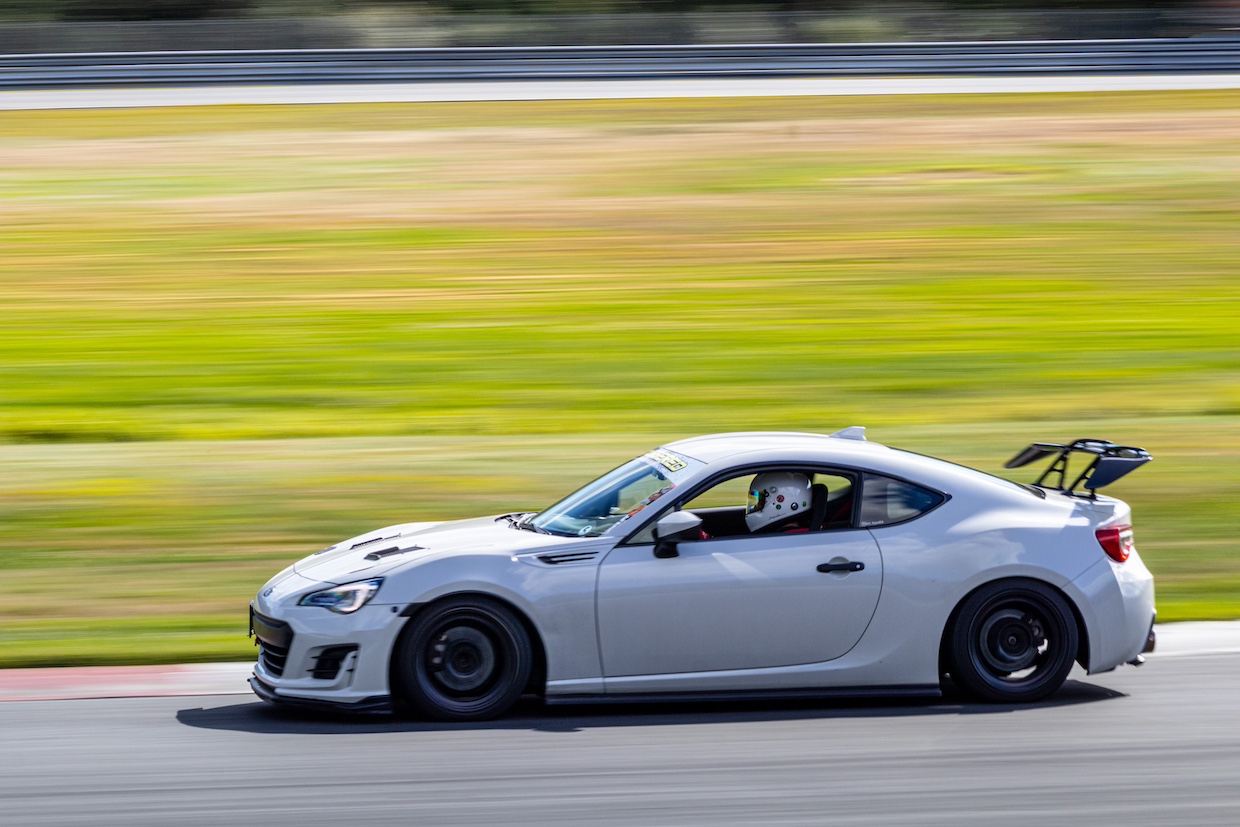
It had been five years since I had owned a track car, it was the early months of the COVID-19 pandemic, I was languishing, and my wife said
‟You need to do something, you need to make your own happiness”
I needed to do something for myself, to have my own thing.
I started looking for a fun, rear-wheel drive sports coupes, 350Zs, RX-8, I considered the Miata, but it wasn't for me. I had liked the FR-S/86/BRZ triplets since they came out. They reminded me of an older Subaru era I idolized but could never have: Subaru Type RA and Spec C cars that were about committing to a purpose than chasing metrics. No leather dashboards, no pumped up power figures, just a light, responsive chassis sharpened for the driver who cared enough to use it for its intended purpose and who would be rewarded for driving with skill.
After a six-month search I found a used Crystal White Pearl late-model Kouki (2017-2020) BRZ at a dealership in Annapolis Maryland.
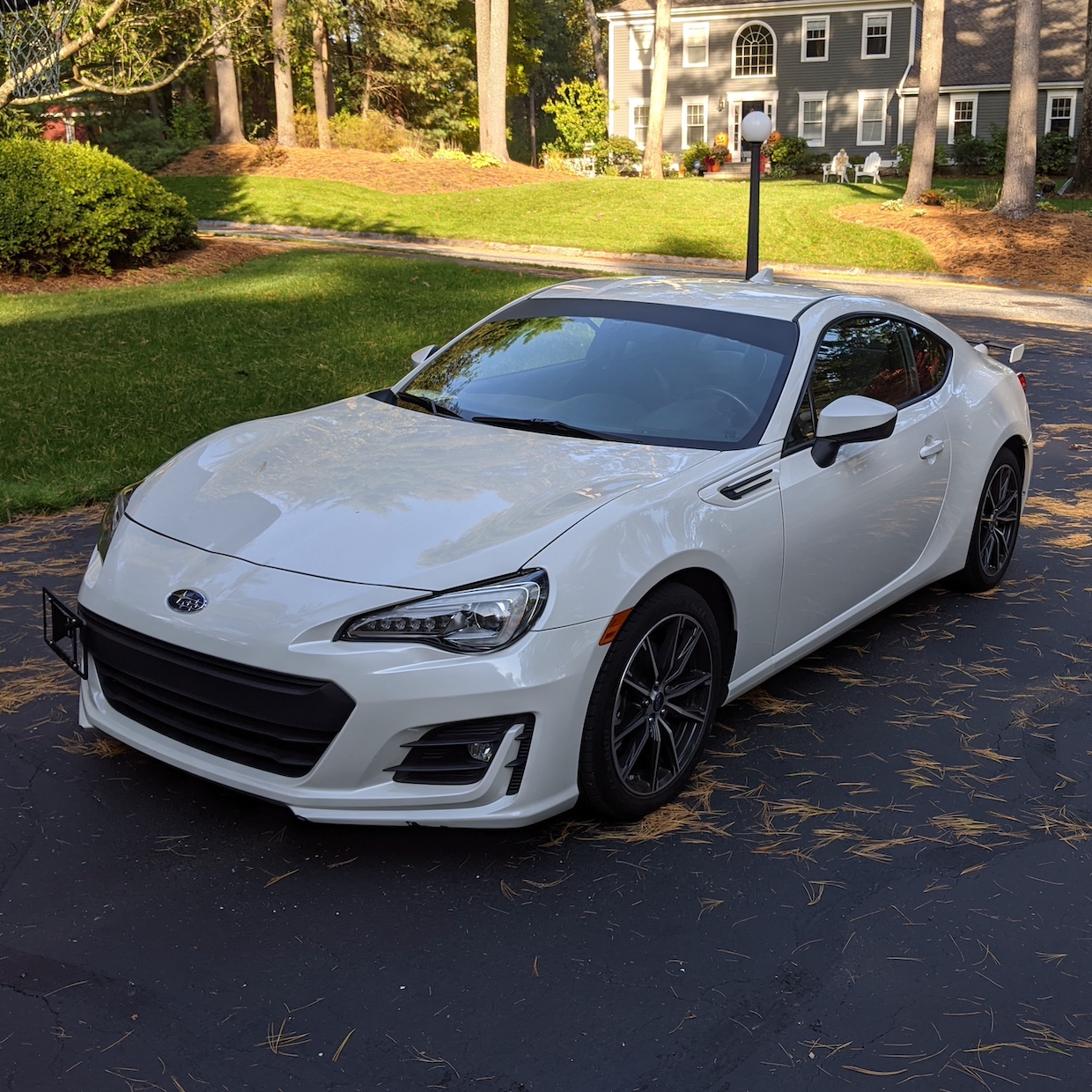
I called Annapolis Subaru and immediately put down a cash deposit. I rented a car and drove from Boston on a Friday night, starting at 10pm. I pulled up eleven hours later, at 9am Saturday morning. The car was in great condition, it idled with that signature Subaru rumble, muted through the stock exhaust, the tach vibrating steady as if it had nothing to prove. Lucky for me, this was just before COVID-19 caused used-car prices to skyrocket. I bought the car the same day and drove it home.
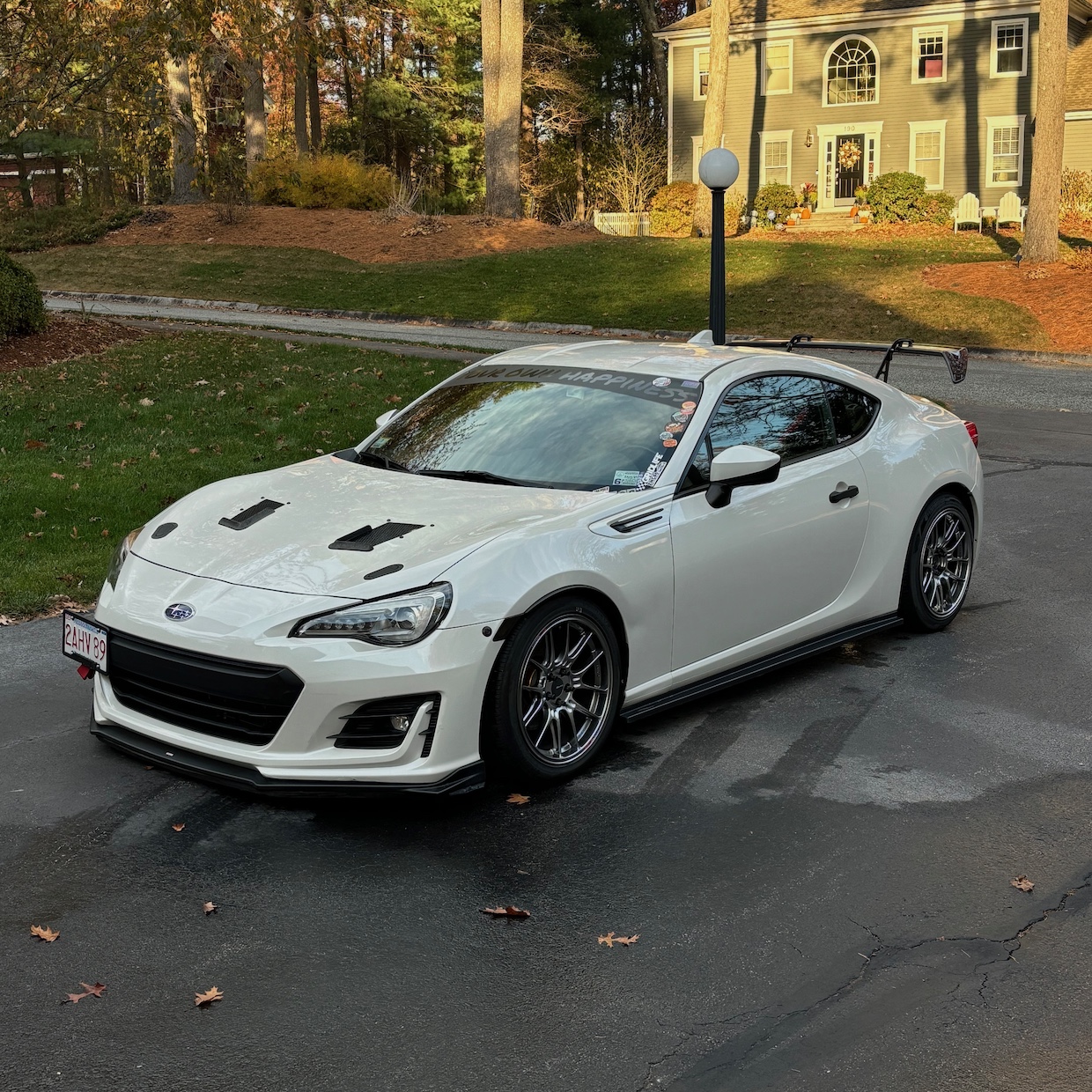
So far the car has handled 40+ track days like a champ, with only a few minor issues. It’s making 188 wheel horsepower, keeping reliability and affordability in check. Power would stay modest and naturally aspirated; reliability and feel would come first. The BRZ did not need to be the fastest car at any track day—it needed to be the car I never got tired of driving. It’s fulfilling its intended role as a driver’s car.
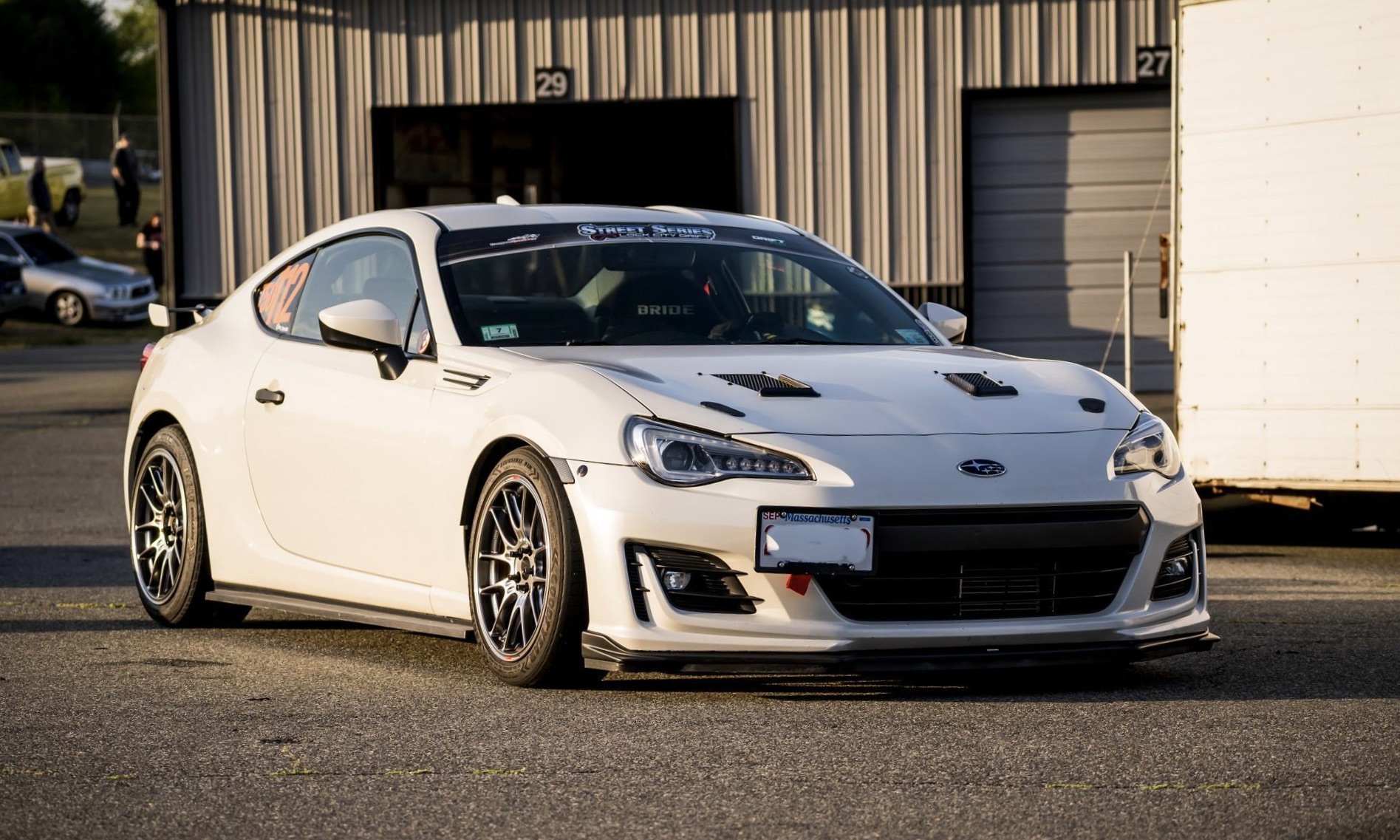
As the build evolved, so did my community around it. What started as solitary efforts working on the streets gradually became small gatherings in my garage. A friend dropped by to help bleed brakes; another came by to lend a hand mounting the STI wing before a track event. A local Subaru meetup invited me to join, talking camber settings and tire choices. The BRZ gave me a reason to show up, but the conversations gave me something I had been missing: a sense of belonging not based on job title or accomplishments, but on shared passion.
There were setbacks, too. A failed throwout bearing at a track day, a missed shift point that put me into a tire wall. Each problem forced me back into the process. Build, break, fix. Over time, I began to notice how differently I responded to these challenges compared to work. At the office, setbacks triggered anxiety and self-doubt. In the garage, problems felt like puzzles. The difference was ownership, and complete involvement. The car was mine—not just in the legal sense, but in the sense that every decision, every bolt, every compromise or refusal to compromise was my decision.
The BRZ gave me a practice of self-directed work, one where the metrics were not imposed but chosen. I could decide, on any given weekend, whether “good” meant shaving a second off a lap, perfecting a heel-toe sequence, or simply finishing a maintenance task that had been bothering me for months.
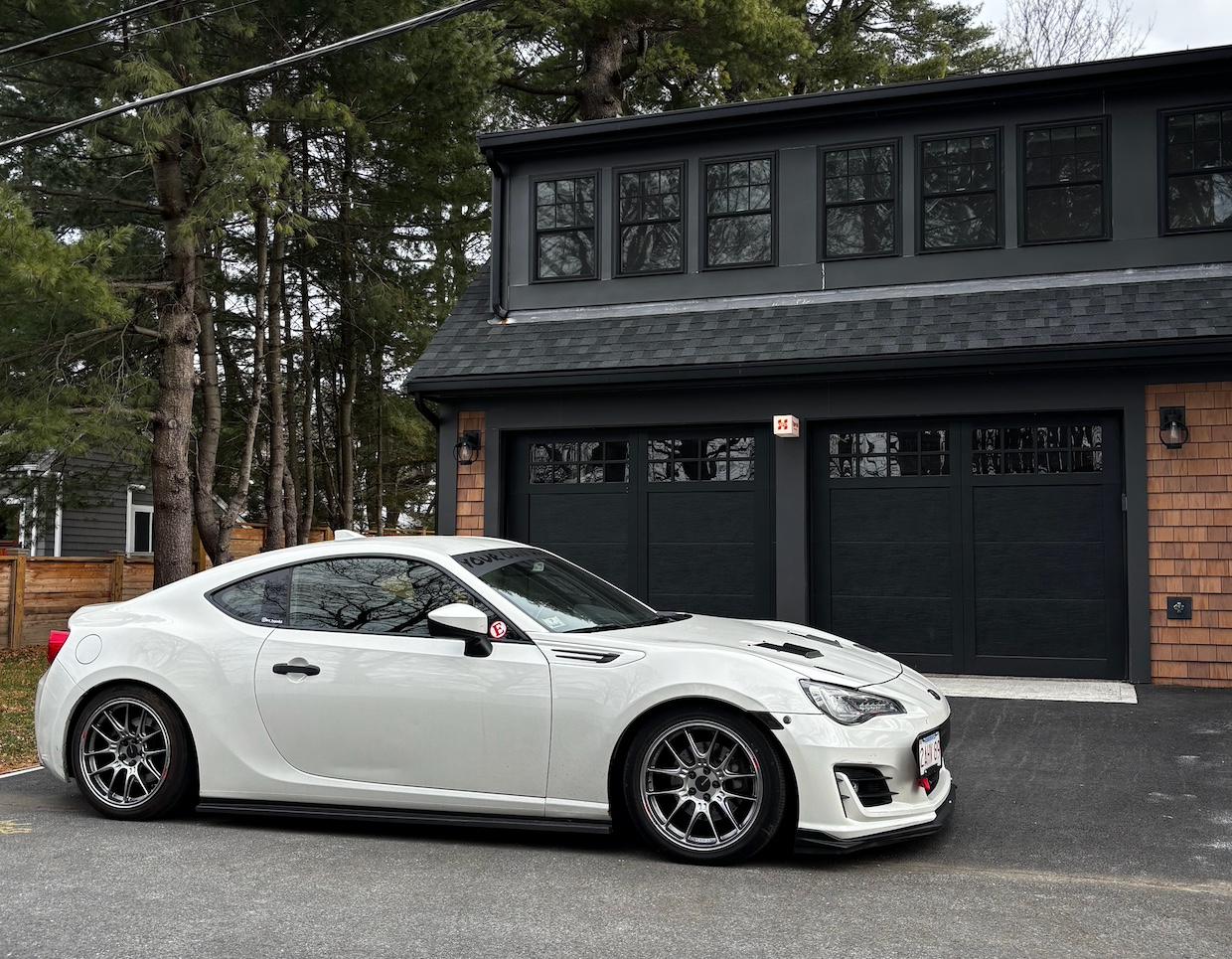
I named the car “Your Own Happiness” not because I expected the car to deliver on its namesake, but the car was a canvas I could feel, a project of complete involvement with a feedback loop measured in tire wear, lap times, and hours under the car. The car itself isn't what would make me happy, its the involvement in creating the vision come to life—the participation in motorsports, and of course the people and friends I make along the way.
“Your Own Happiness” will never become a show car, never win awards, and that suits me fine. The paint has track scars, the wheel faces collect dust and baked-on rubber. Underneath, though, the parts tell a coherent story: a deliberately built 2017 Subaru BRZ, tuned for balance, reliability, and a driver who values participation over spectatorship.
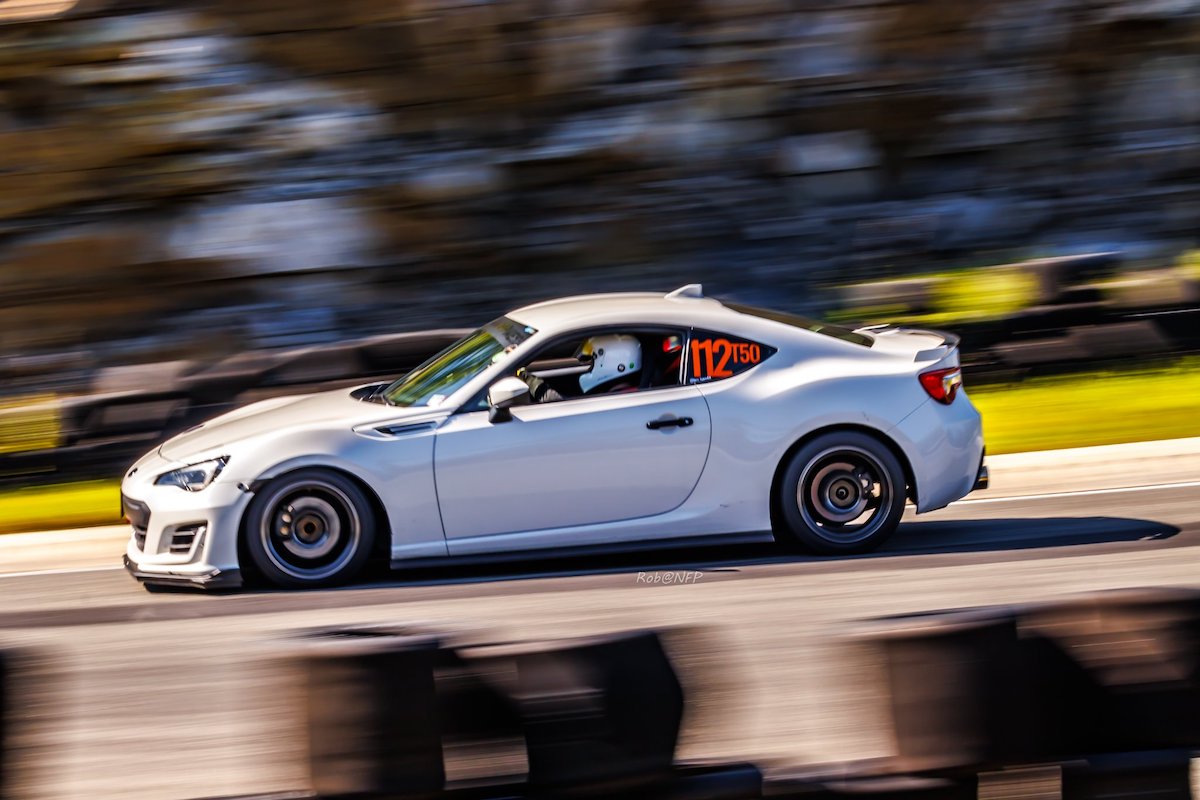
Some details on the build:
Engine
I started where many Subaru owners do: the exhaust and headers. The factory unequal-length manifold had a certain nostalgic rumble, but it strangled the midrange and left some power on the table. Swapping to a Tomei Japan Expreme Ti equal-length header with a Fujitsubo Authorize R TypeS exhaust turned the soundtrack from silenced purr into a lumpy rumble that is assertive over 4000 RPM but wont anger the neighbors.
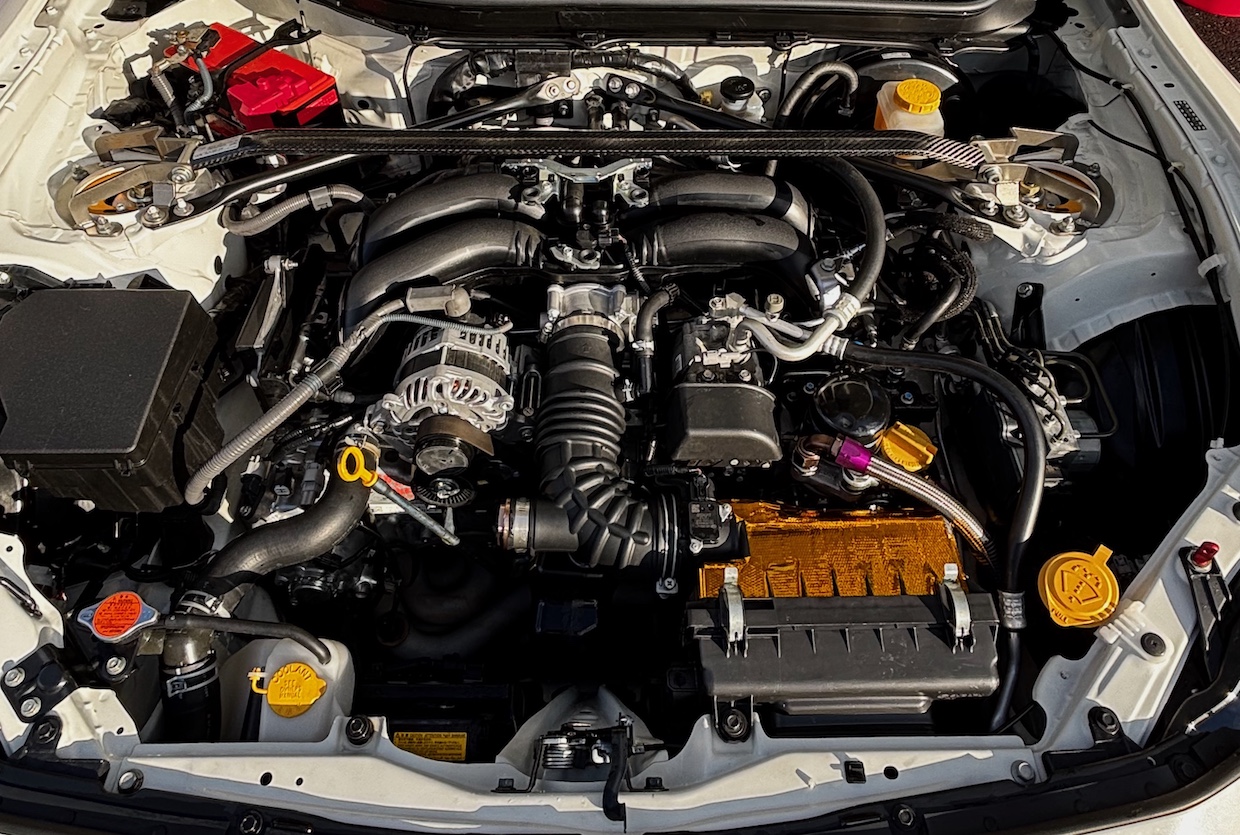
The ECU tune tied everything together. With the header and exhaust in place, a conservative calibration on 93 octane via ECUTek nudged the FA20 to 188 horsepower and 149 lb-ft of torque at the wheels, but the real improvement lived in the curve, not the peak. The midrange dip smoothed out, throttle response sharpened, and the car pulled more cleanly from corner to corner. It was still, by any modern standard, a modest number, and that was precisely the point. The BRZ remained a car that demanded momentum and rewarded discipline. It did not let me hide behind excess, it requires finesse and rewards consistency.
In January 2026 I was looking for more power across the powerband, so I took a 2000 mile road trip from Boston to ASMotorsports in Wisconsin Rapids to swap the FA20 for a low milage 640mi FA24D from a 2024 ZN8 GR86. I reused the Tomei exhaust & headers, transmission, and Cusco engine mounts. We modified the FA20 engine harness with wiring changes to adapt to the FA24D. Adaptations included a different fuel pressure sensor & connector. The zenki FA20 crank position sensor doesnߴt use a Hall Effect sensor, while the 2017-2020 switched to Hall Effect, but uses a different connector which had to be wired in. The FA24D coolant temp sensor on the crossover pipe is in a different location than the FA20 and uses different connector, requires lengthening and repinning. The oil temp sensor is a different connector and required repinning. I had Cusco motor mounts, which had to be machined slightly but otherwise worked. We used a Link G5 plug-in ECU, model 241-4000 paired to a Link CAN Lambda module 125-1000.
We initially retrofit the wrinkle red intake manifold that was unique to kouki ZC6 manual Subaru BRZs. We wanted to see how it compared to the black plastic FA24 intake manifold. The red manifold got us to 175hp/170tq. We fit the OEM black plastic intake manifold and it immediately yielded gains across the entire powerband to 200hp/177tq, nettinng 25hp/7tq—well worth it.
Reusing the same exhaust system, the FA24 swap gained 12HP and 28TQ, which looks lackluster on paper, but feels like a significant bump across the operating range when in motion.
Next I'll be opening the exhaust with a free flowing front-pipe as the car still has the FA20 OEM part which has a smaller ID than the FA24 and is likely causing backpressure.
FA24D Engine swap from a ZN8 2024 GR86, Link G5 plug-in ECU, Link CAN Lambda module, Tomei Japan EXPREME Ti equal-length manifold, Fujitsubo Authorize R TypeS cat back exhaust, HKS oil cooler, Odyssey PC1100 battery, Beat Rush sound generator delete, Perrin fuel rail brackets.
Drivetrain
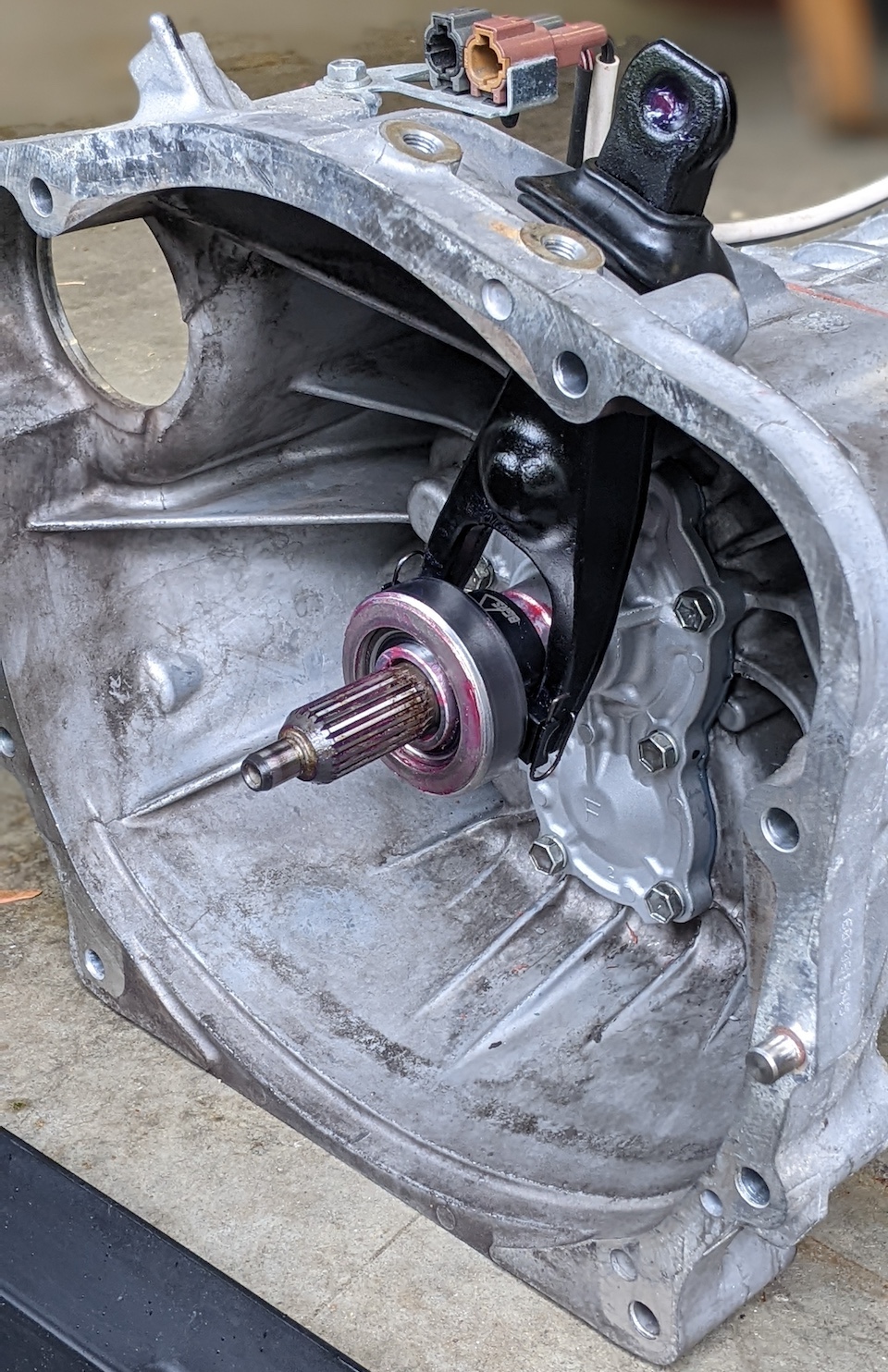
The drivetrain has slowly grown more serious. A 1.5-way Cusco limited-slip differential replaced the stock unit driving retrofit axles from the 2nd gen– providing more consistent behavior under power and on corner entry. Engine and transmission mounts, along with key bushings, were upgraded to firmer Cusco pieces, trading a bit more vibration for clearer feedback during transitions. This was not the sort of thing a casual passenger would notice, but I did. Each time I tipped into the throttle at corner exit, the car’s response had less slop, less delay. It was like speaking a second language with fewer pauses.
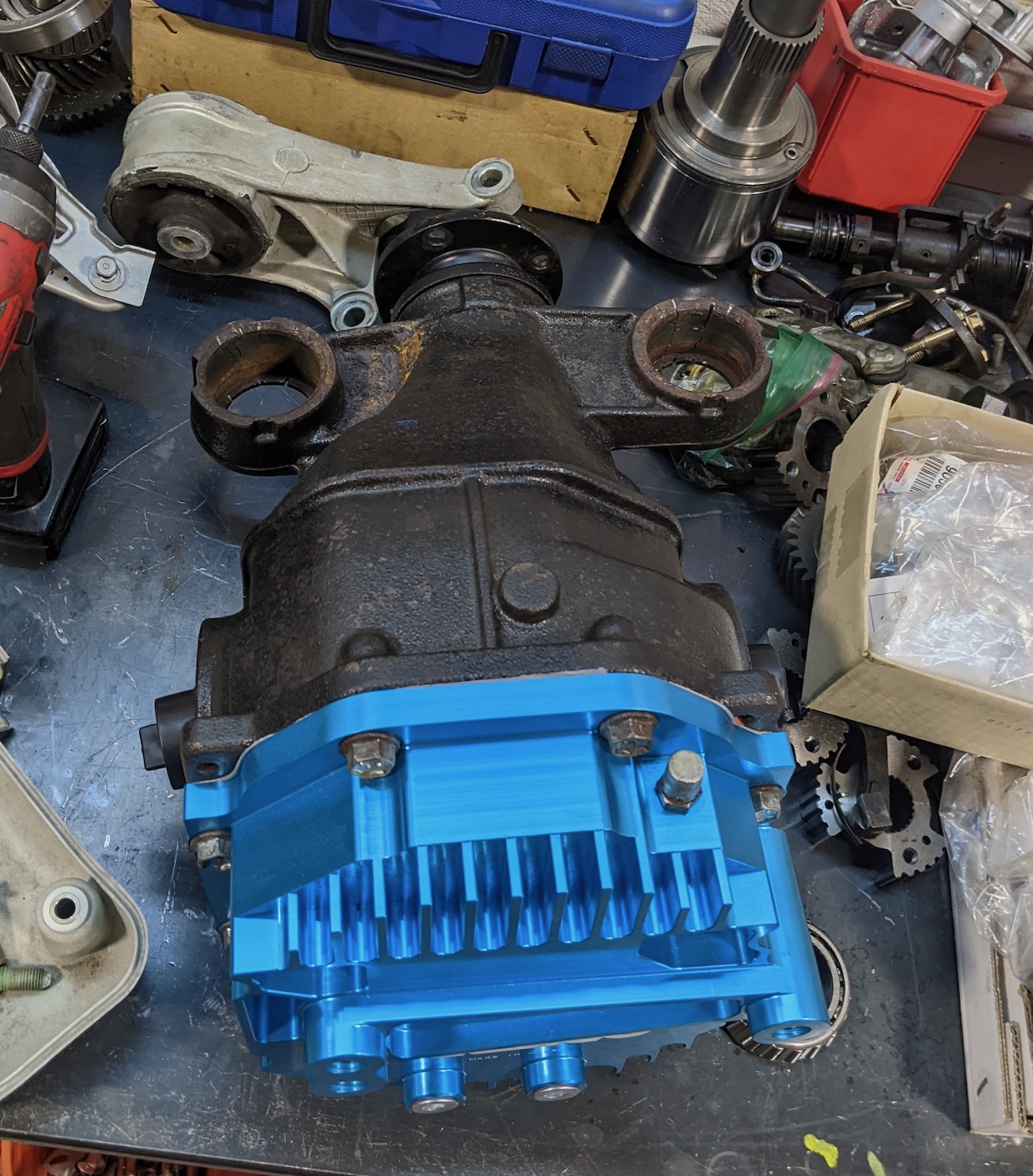
Cusco engine mounts, Cusco steering rack bushings, Cusco shift lever bushings, Perrin rear shifter bushing, MTech shifter springs, STI transmission mount, Cusco transmission mount collar, Cusco braided steel clutch hose, Verus Engineering forged clutch fork & pivot, BattleGarage RS throwout bearing, PBM rear subframe bushings, retrofit OEM ZD8 axles, Cusco rear differential bushings, Cusco 1.5-way LSD, Cusco differential cover.
Suspension/Brakes
One of the major improvements in the FA24D over the FA20 was the introduction of a brake booster pump, which creates consistent brake pedal feel that is independent of the engine RPM. The FA20 suffered from inconsistent brake boost assist when engine RPM dropped.
I wanted a more precise connection, something that could survive the heat cycles and curbing abuse of track days without turning the commute into a punishment. Öhlins Road & Track coilovers became the centerpiece of the suspension, chosen as much for their consistency as for their adjustability and maintainability.
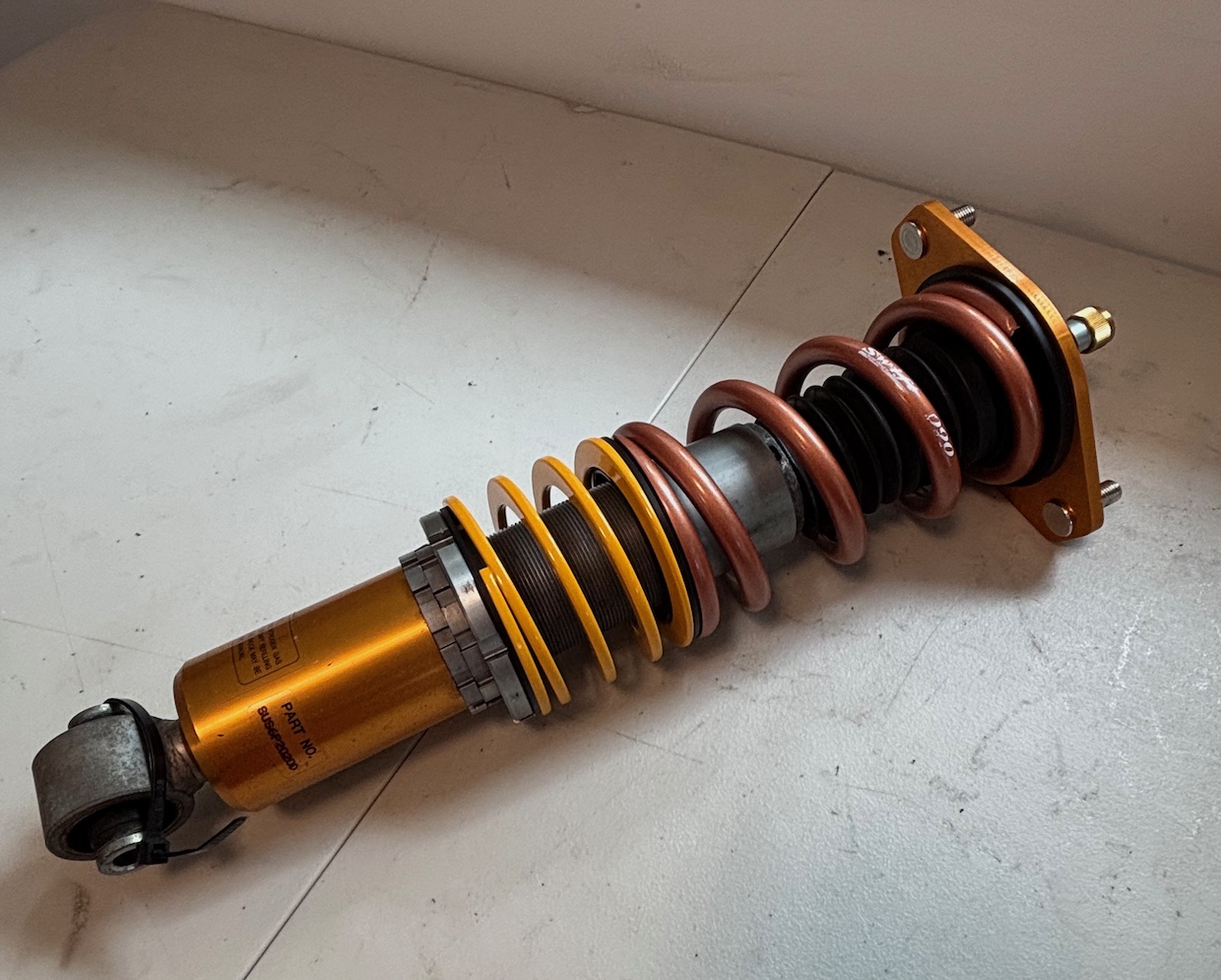
Öhlins Road & Track coilovers custom valved, Swift springs with helpers, SPL rear lower control arms, OEM knuckles modified for more steering angle, SKP (extended) tie rods, Hotchkiss front endlinks, H&R 15mm spacers, Cusco front strut bar w/master cylinder stopper, DBA 5000-series 2-piece front rotors, Spiegler braided steel brake lines, CounterSpace CSG Spec C1 & C11 pads, ARP extended wheel studs, Muteki SR48 open-ended lug nuts.
On track, the changes were transformative. With the Öhlins paired to sticky tires, turn-in sharpened, body roll trimmed, and the car’s breakaway became more predictable. Under the braking markers, the pedal—now pushing fluid through braided lines to DBA rotors and CSG pads—felt firmer and more communicative. A set of ARP wheel studs and fresh hardware meant repeated heat cycles and tire swaps would not end in sheared-off fasteners, especially with the wheel spacers. Where the stock car feels a little vague at the limit, this version spoke to me in complete sentences.
Wheels/Tires
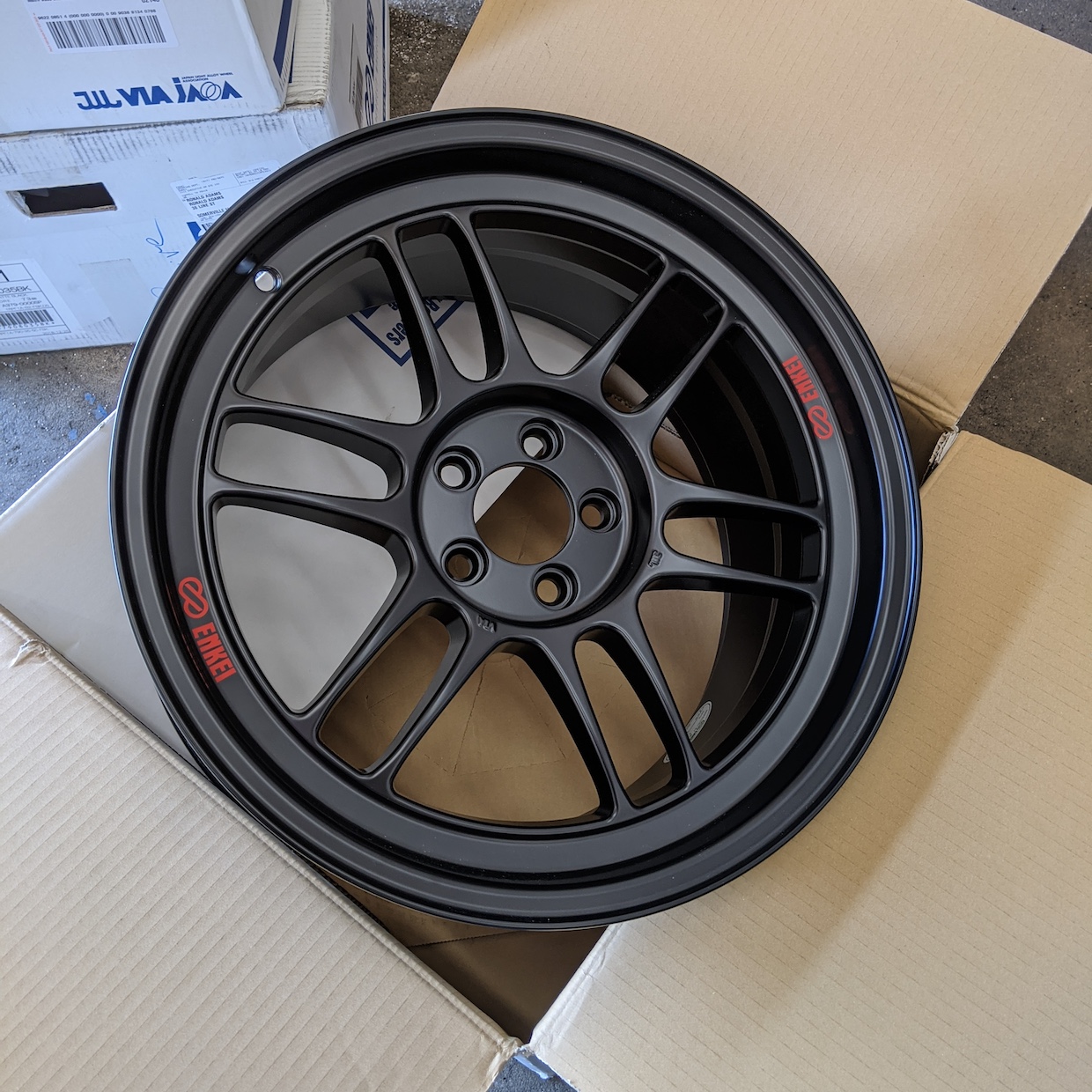
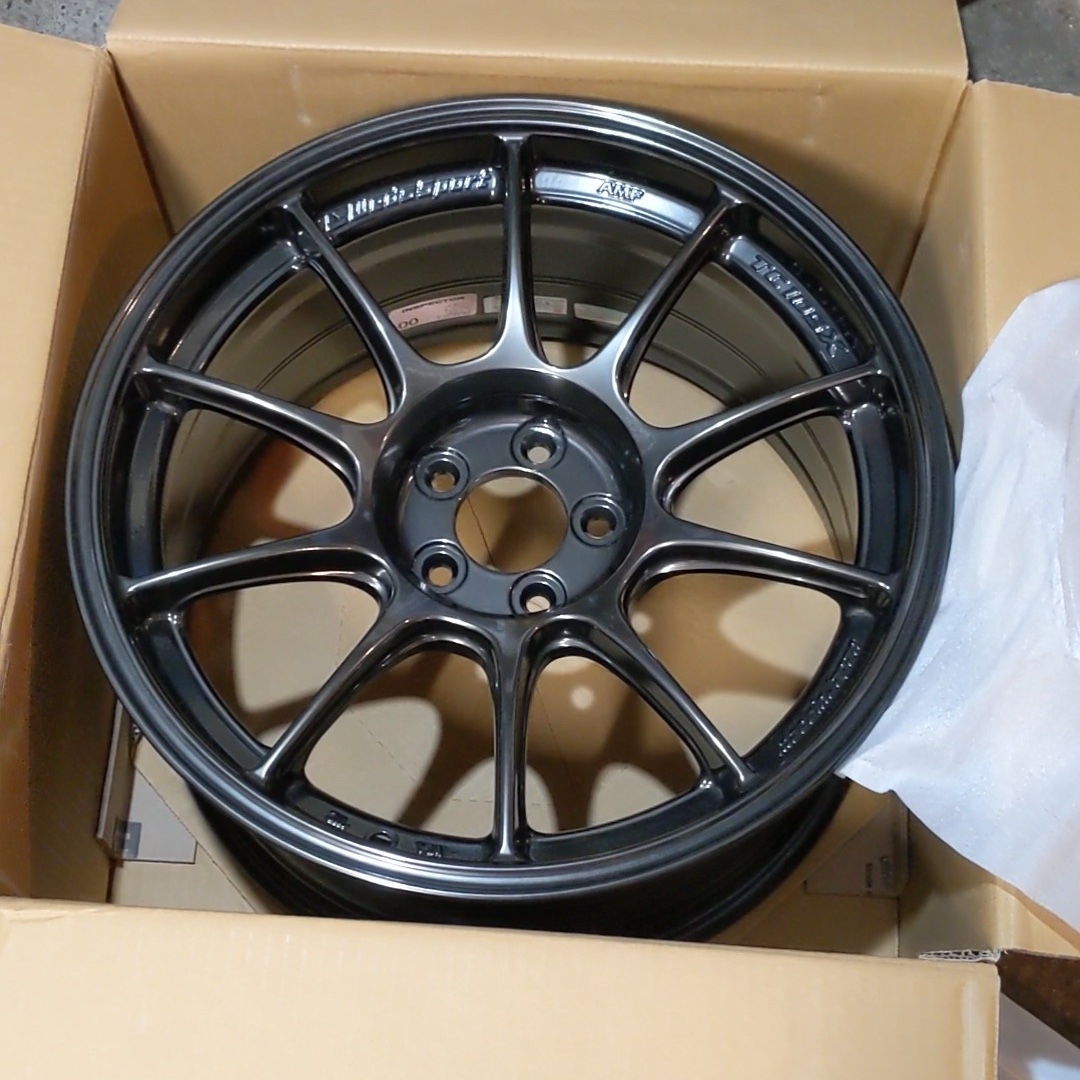
ENKEI RPF-1 17x9+35 in Matte Black on Bridgestone POTENZA RE-71RS in 225/45R17.
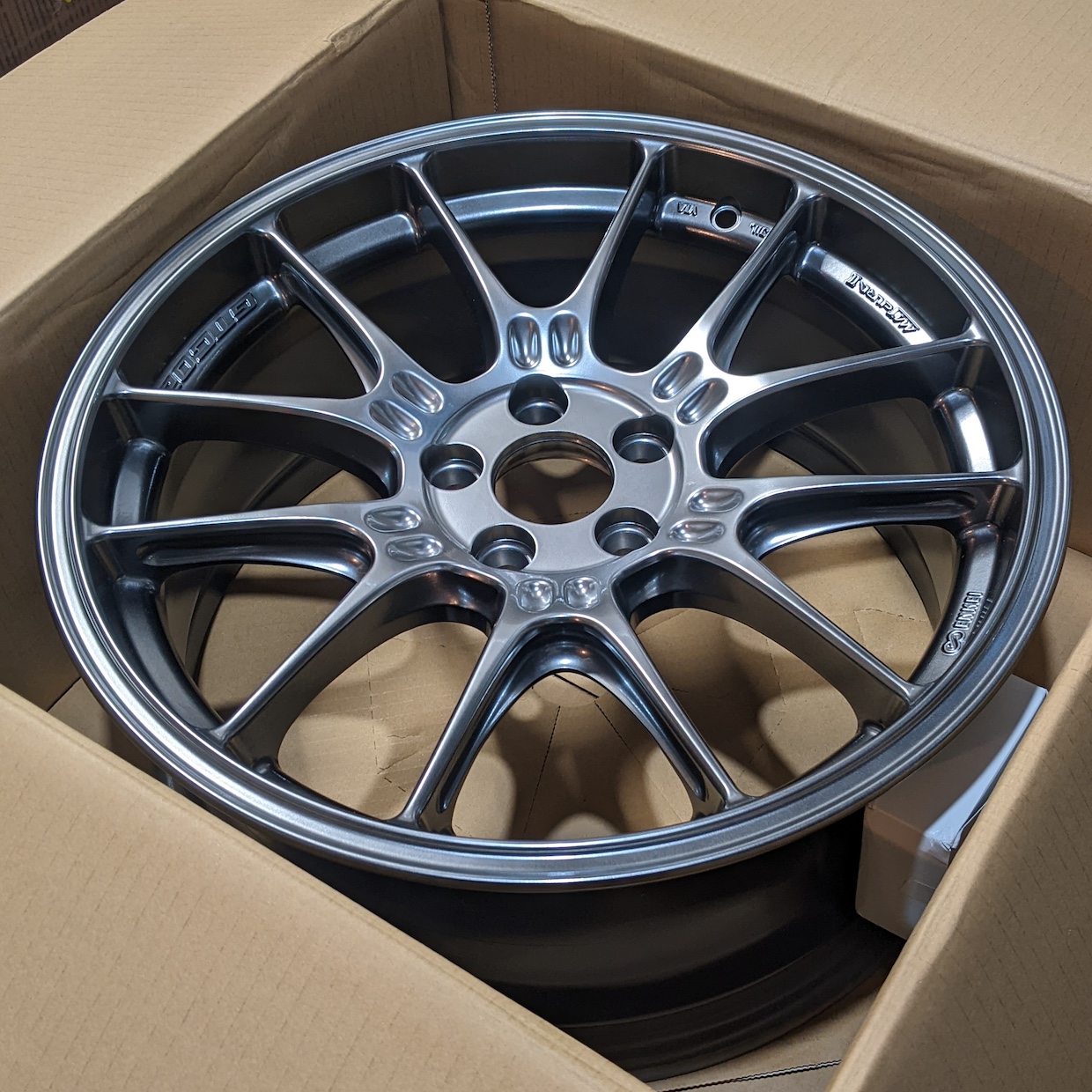
Enkei GTC02 in Hyper Silver F 17x7.5+38 R 17x9+43 on Goodyear Eagle Exhilarate F 215/45/R17 R 225/45R17.
WedsSports TC-105X EJ Titan 17x9+35 square on Yokohama ADVAN A052 225/45R17.
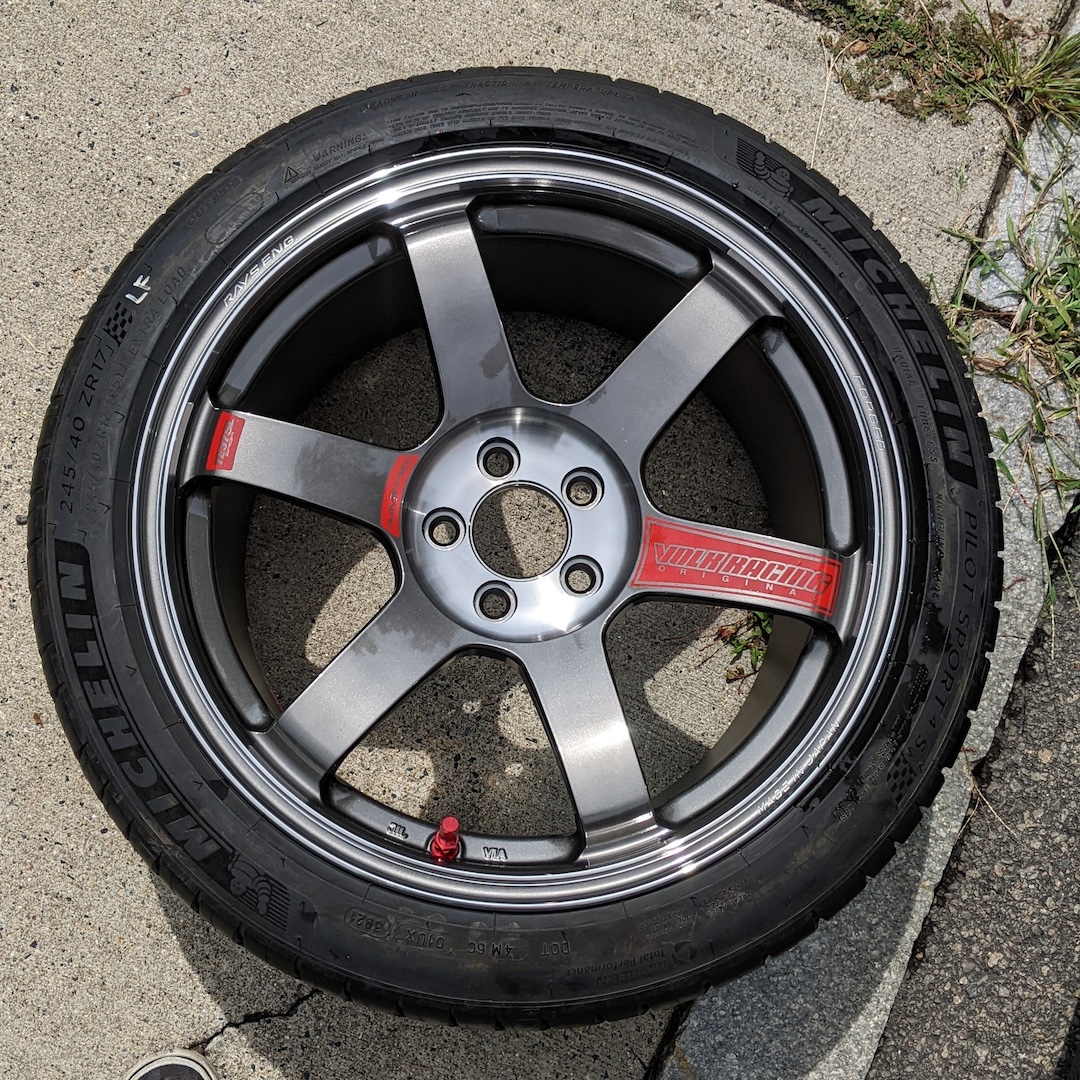
Rays Engineering VOLK Racing TE-37 Saga SL 17x9.5+45 on Michelin Pilot Sport 4S in 245/40/R17.
Exterior
The exterior is mostly OEM parts from TRD and STI. I run the Subaru STI wing on track, and have another trunk for that wingless look when I feel like it.
Subaru STI bumper lip and lip skirt, Subaru STI Carbon Fiber Swan Neck wing (for ZD8 retrofit to ZC6), Subaru unpainted door handles, Toyota TRD side skirts (kouki), CLEiB carbon fiber side skirts, Cusco tow strap, Verus Engineering carbon fiber side markers, Aerocatch hood pins, Vermont Sportscar Carbon Fiber hood vents & gurney flaps, Quik-Latch front bumper release, Audi Q3 overfenders, Perrin license plate bracket, Subaru 'Type RA' badge.
Interior
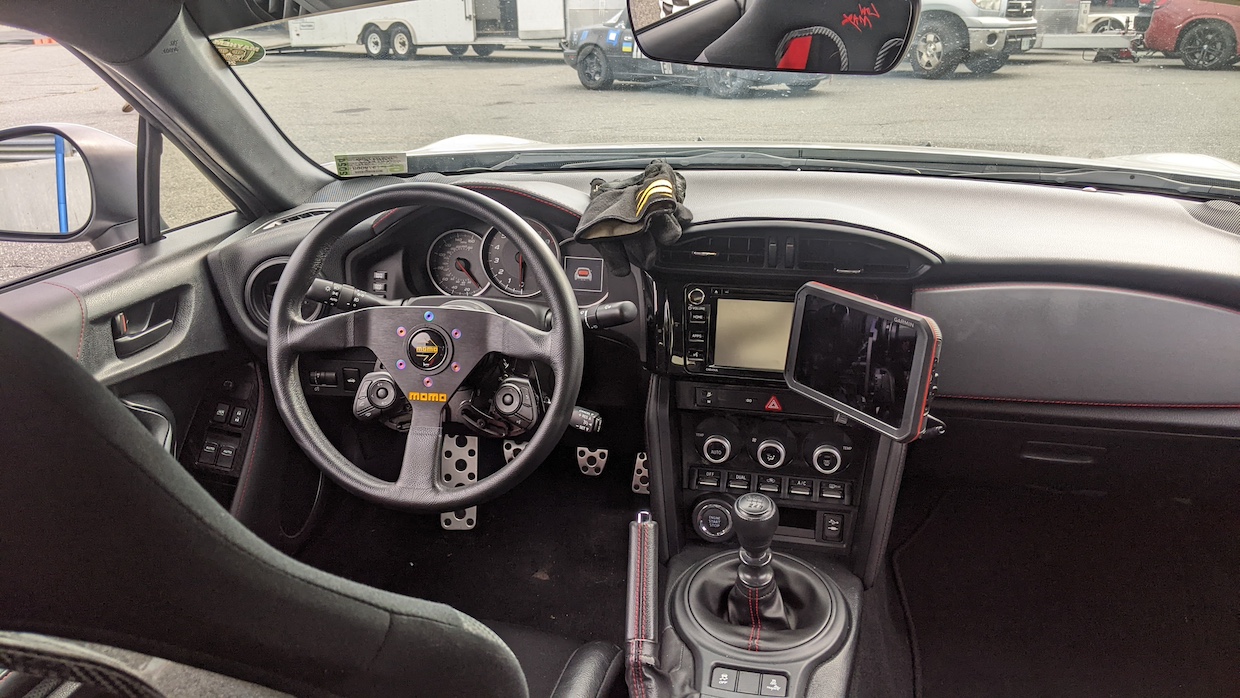
The build was not purely about speed. I paid equal attention to the small details that would make the car a place I wanted to be in for long stretches. A Bride Zeta IV driver’s seat, bolted low and tight, anchored my body in a way the stock seat never could. A Momo steering wheel on a Works Bell quick-release hub brought the controls closer to my chest, aligning my posture with the car’s controls. A Verus throttle pedal spacer corrected the awkward OEM pedal geometry and transformed heel-toe downshifts from awkward fumbling into a casual reflex.
Bride Zeta IV seat, MOMO Type 78 steering wheel on Works Bell quick release with steering controls relocation switch kit.
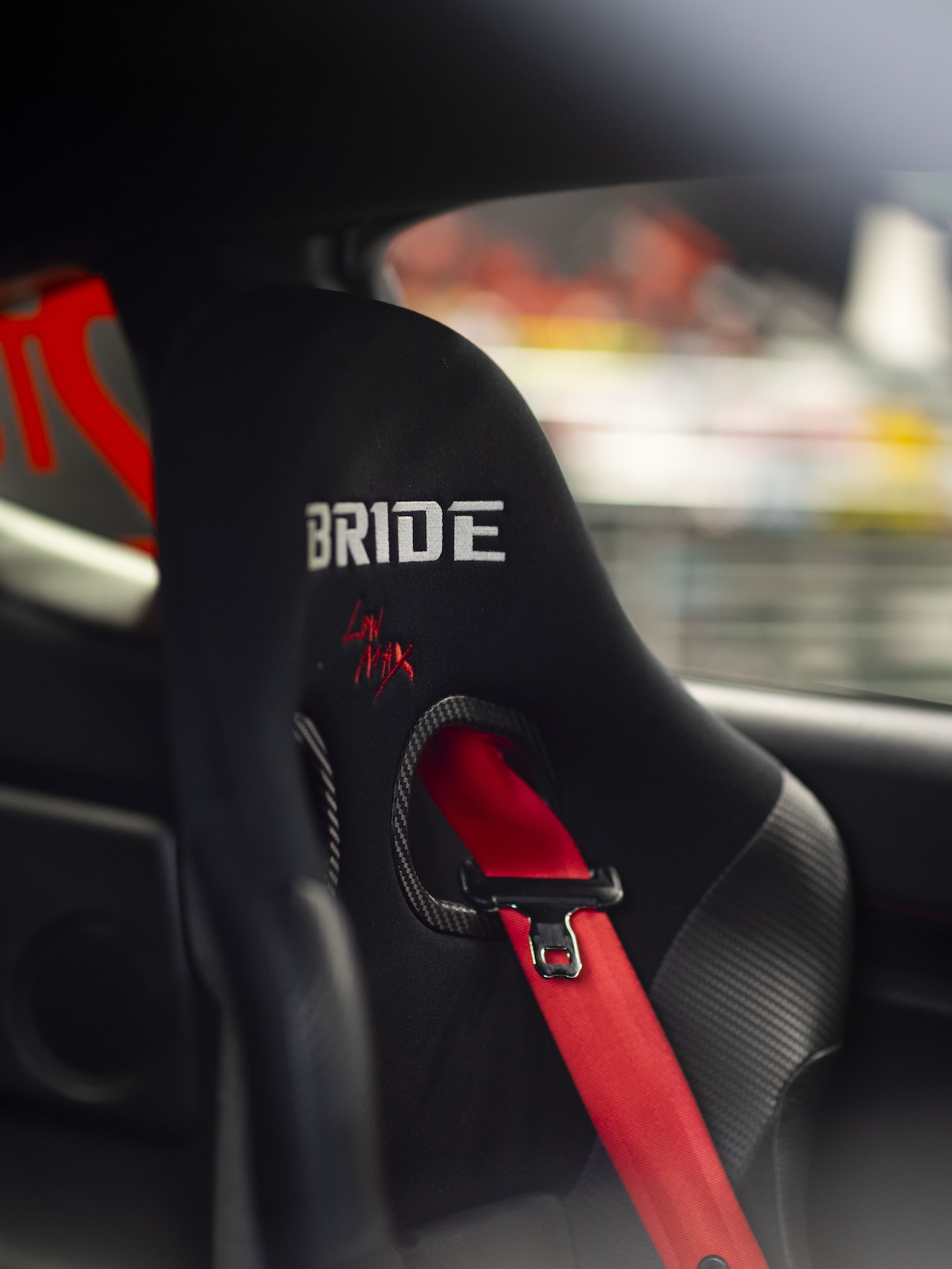
Verus Engineering throttle pedal spacer, P3 v3 ODB gauge, Safety Restore Ferrari-red custom seatbelt webbing, JDM Toyota/Subaru OEM interior trim & door handles, Amerex & Element fire extinguishers.
“Your Own Happiness” is the ongoing project of making my own happiness. What makes yours?